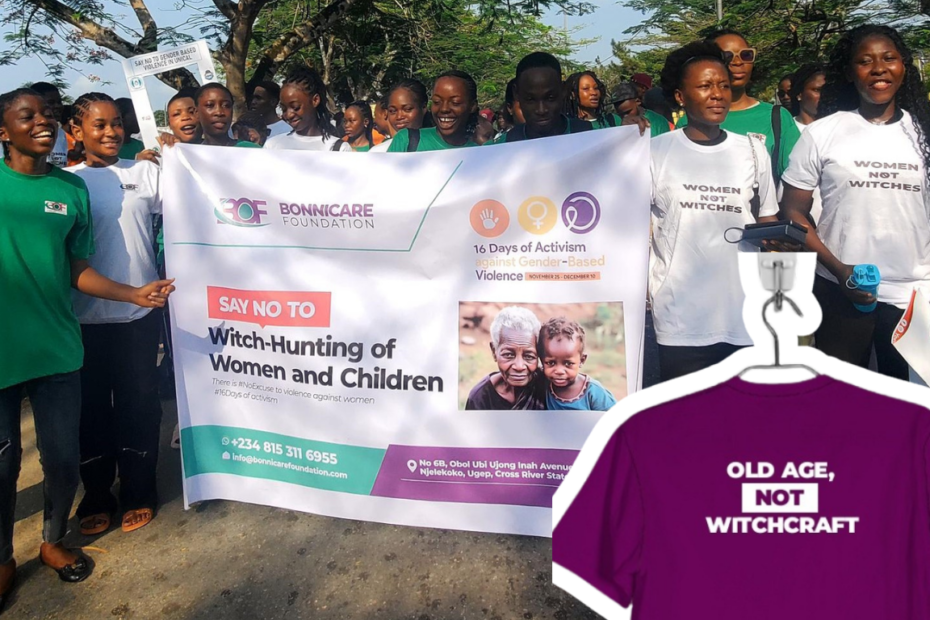
In the South-South region of Nigeria, particularly in Cross River and Akwa Ibom States, witchcraft branding and labelling is still one of the most inhumane human right issues. Witchcraft accusations is not limited to the elderly, it also affects women and children. Those branded as witches have faced cruel treatment, such as being chained, thrown out, starved, beaten, set on fire and even killed. These harmful practices have torn families apart and displaced children and caused long-lasting trauma in the lives of the accused.
Two years ago, during the 16 Days of Activism Against Gender-Based Violence, Bonnicare Foundation partnered with the Students Union Government of the University of Calabar to raise awareness on this issue. Rather than staying in offices or lecture halls, we took the campaign into the streets of Calabar, speaking directly with market women, youth groups, and local residents, reaching over 5,000 people.


Through conversations and public sensitization, the campaign created safe spaces for people to ask questions and discuss the consequences of witchcraft branding. These discussions not only raised awareness, but also encouraged collective community action, protecting those at risk and promoting accountability for those who are at the fore front of harming those being labelled.
During the interviews a young youth voiced his thought: “I saw a young child that was tied and set on fire. Lots of people gathered around, but instead of helping her, they were cheering and celebrating. I could not believe what I was seeing.”
A market woman stated: “It is time we stop blaming people for things they did not do.”
A young man also shared a perspective that calls for reflection: “The biggest problem is religion. Some churches tell parents that their children are witches, which makes the situation even worse.”
The feedback from these interviews shed more light on how dangerous these beliefs are and why urgent action is needed.


Real Cases from Cross River and Akwa Ibom
In communities across Cross River State, children have been accused of witchcraft after a family member fell ill or something bad happened in the home like a drastic financial setback or accident. In some areas, elders and children were taken to church “deliverance sessions” where they were forced into painful rituals and left traumatized.
In Akwa Ibom State, we documented cases of six (6) teenagers who were abandoned by their parents, after their pastors brainwashed them that they were witches. In one such situation, children were found near a bridge after being dropped off in the night, malnourished and confused, after their parents were told to leave them because they were “possessed.” These children had nowhere to go and had spent nights alone, scared, and hungry.
These cases are painful examples of how religion mixed with ignorance can lead to real harm. They show that accusations are not just rumours, they can result in real suffering, loss of family, loss of home, and deep emotional trauma.
Legal Response: Protection Under the Law
The urgency and scale of this issue led to the creation of a law in Cross River State. Section 42 of the Child Rights Law (2023) clearly states:
“Any person, group of persons, corporate or unincorporated body or organization of whatever description who alleges, threatens or accuses a child of being a witch or wizard commits an offence and is liable on conviction to ten (10) years imprisonment with hard labour or a fine of five hundred thousand Naira (₦500,000) or both.”
This law is an important step in protecting children and older adults from abuse and false accusations. While the exact number of people who have been persecuted since the law was enacted is unknown, the legal framework provides a strong tool for communities, authorities, and organizations like Bonnicare Foundation to fight against witchcraft branding and labelling. THE LAW EXIST; IMPLEMENTATION IS THE NEXT STUMBLING BLOCK.
Stories of Hope: Ekama’s Journey with our organization (pseudonym)
Bonnicare Foundation has worked hard to advocate against this issue over the last four years and produced two documentaries highlighting the problem of witchcraft branding. One of the documentaries features Ekama (pseudonym), a 13-year-old orphan girl child who was wrongly accused by her relative of bringing misfortune to the family. She was thrown out of the house, and people were warned to stay away because she was labelled a witch.
Fortunately, a kind‑hearted couple, Late Mr Eyong Ubi and his beloved wife Mama Evelyn, stepped in. She informed the Ugep youths and community leaders of her intention to take Ekama in, raised her as her own daughter, and protected her from harm. Bonnicare Foundation provided psychosocial therapy and enrolled her get back into school, ensuring she could continue her education and begin to recover from the trauma. She is now 16 years old and currently in JSS2, fully sponsored by our organization.
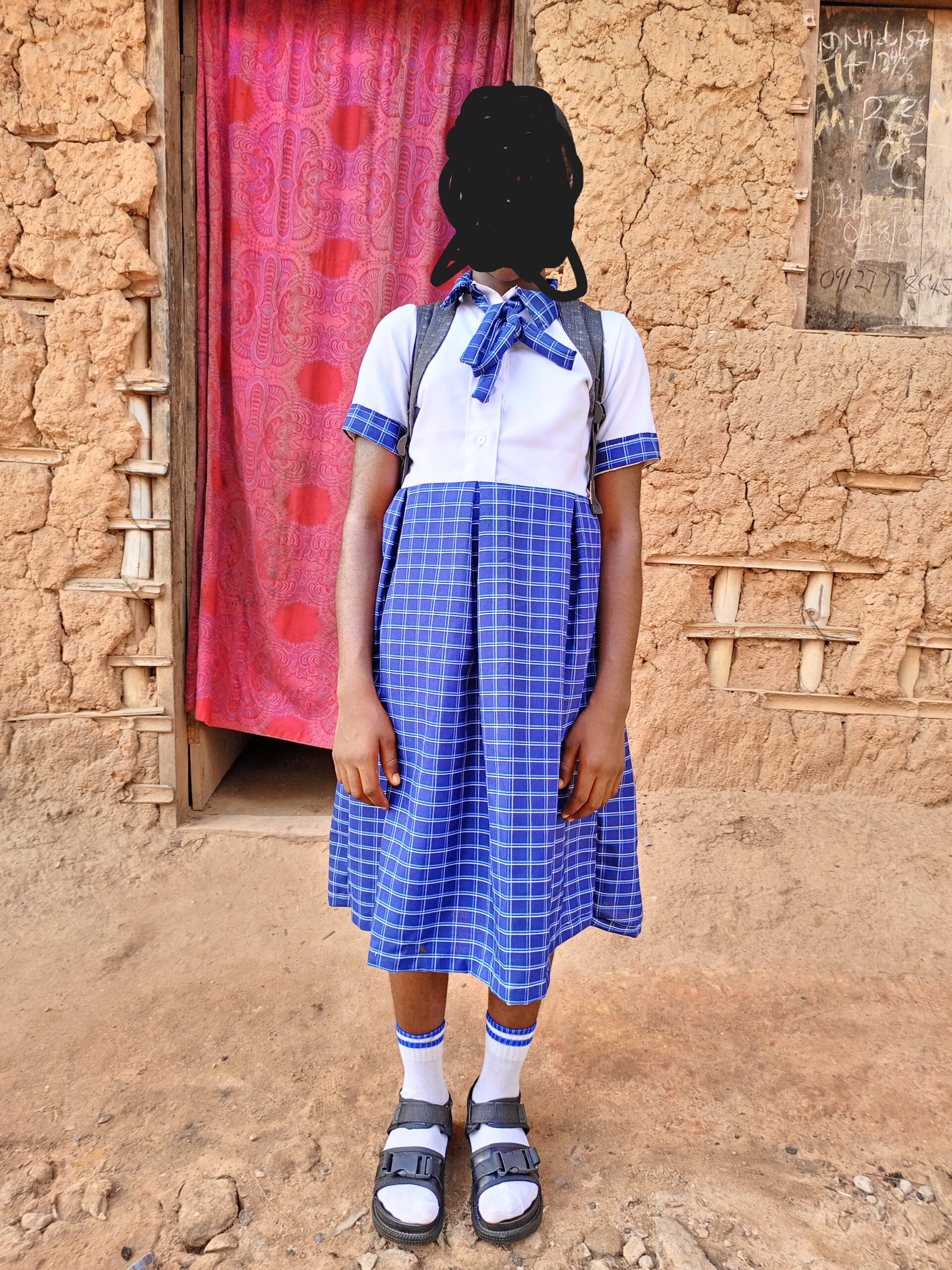
Sadly, Ekama’s story is not unique. Many elderly people, women and children in the community face similar accusations simply because others believe they are responsible for certain misfortunes or events.
Community‑Led Protection: Igbo Imabana Byelaw
At the community level, Bonnicare Foundation facilitated an inclusive, community‑led process that resulted in the adoption of a protective byelaw in Igbo Imabana community of Cross River State, Nigeria in 2023. Since its adoption, this byelaw now safeguards over 5,000 women and girls and establishes local accountability against abuse which includes the protection of the elderly, women and children.
Stories like Ekamas remind us of the human cost of witchcraft accusations. With laws in place, communities taking action, and Bonnicare Foundation leading the way, there is hope that the elderly, women and children will no longer live in fear of false accusations, branding or the fear of being killed.
We must continue to educate, engage and empower our communities so that harmful beliefs give way to protection, respect, and justice for every child, woman, and older adult in Southern Nigeria.
Here are relevant links to watch documentaries of our work within rural communities.
1. https://youtu.be/UJrkf9ALbu0?si=qOJXDE-DTTCozso1 2. https://youtu.be/_6gPTCRR6gQ?si=6ZLQAOvAA27qONVv 3. https://youtu.be/x1d2B_X-HLw?si=LJSFCL6uL_dQrH-X
If you’re led to support our advocacy efforts, please donate to 0165410679 – Union Bank – Bonnicare Foundation or you can donate through this link https://bonnicarefoundation.com/donate/


